

The origin story of Frontier Community Access Television (FCAT) is not a short and sweet one — it’s a testament to persistence. From covering its first Selectboard meetings to its current role documenting everything from high school sports to student films, FCAT has spent two decades proving that a small group of people can indeed make a “huge difference.”
In 2003, 10 residents from Deerfield, Sunderland and Whately sat down with Comcast employees with one goal: expand cable access to the three towns’ schools.
“The plan was, as towns, we didn’t have a lot to say, but if you put three or four of us together, we may have more to do,” said Tom Fydenkevez, former Sunderland Selectboard member and chair who represented his town at that table.
At the time, significant stretches of homes in the three small towns at the southern tip of Franklin County lacked cable TV or internet access.
In order for the towns to expand cable access, the cable company had to give the towns a percentage of its revenue in exchange for a license to provide the cable service, according to Joyce Palmer-Fortune, current Whately Selectboard chair who also took part in the meetings as a representative of her town.
During the negotiations, she remembered thinking, “We need to negotiate something that’s going to give it enough resources to keep going under the existing momentum. I’m a physics teacher, I want momentum and don’t want anything to slow down, I want to be able to make sure that it’s got the funds it needs.”
Before the group set a time limit, the meetings often stretched until 11 p.m. When Fydenkevez returned home, he remembered his wife often asking him, “Where have you been? No meeting goes until 11, 11:30.”
“With so many people involved, it was hard to nail it down and get it done in a short period of time,” remembered Mark Gilmore, former Deerfield Selectboard member.
“They played hardball, we played hardball,” Fydenkevez said.
Three years later, the group negotiated a contract with Comcast to start FCAT. The station opened on Elm Street in Deerfield in January of 2006, and what started as cable access became the source of so much more for southern Franklin County residents.
“They never gave up, they never gave up,” Fydenkevez said of the group behind the FCAT agreement. “If you think about it, it just shows that sometimes people think that they can’t make a difference — I can tell you they’re a small group of people that really made a huge difference … We probably wouldn’t have community access TV like we do today if it wasn’t for them and how hard they fought in their vision.”


From the beginning, the FCAT team filmed municipal meetings, inviting residents to watch the conversations behind local government decisions from their kitchen tables or living room couches.
“It was a great way for us to finally bring government into the homes of people so they could actually find out what was going on,” Fydenkevez said.
In 2009, Kevin Murphy, the computer science teacher at Frontier Regional School, brought his expertise to FCAT, and the mission of the station expanded.
Murphy recorded school plays, band concerts and sports games at Frontier. Palmer-Fortune still owns the tapes of her two sons’ plays.
“We have copies of their plays because of FCAT, because FCAT showed up,” she said.
After school, Frontier students tended to spend their free time competing in sports, playing music or creating art. When Murphy joined the station, FCAT became a place for kids with a knack for technology. Palmer-Fortune’s son and countless other kids recorded “play-by-plays” of Frontier’s teams facing off against other schools, narrating the games as commentators. A few years later, students interviewed local figures on camera as the presidential election results rolled in.
“He got to interview me!” Palmer-Fortune said of her son Alex Fortune, who spent a lot of time in middle and high school in front of and behind an FCAT camera.
In 2025, the Alliance for Community Media – Northeast recognized FCAT crew members for their election and sports coverage.
“Community access television is very important to the community not only because of access, but also education,” Kevin Murphy reflected at FCAT’s annual meeting on Jan. 28. “The reason why community access television was set up was for giving that voice to the community and the know-how and education. So, I think we should continue that mission of both covering everything that’s going on with the government meetings and everything else, but giving everybody a voice and the chance to turn on the lights and roll that camera.”
In around 2012, Conway joined FCAT’s contract, solidifying FCAT’s coverage area. Five years later, the station’s headquarters moved across town lines to the second floor of the Sunderland Town Hall.
Then, the COVID-19 pandemic hit.
“Our focus and our purpose was really put to the test,” Jonathan Boschen, the current general manager of FCAT, said at the annual meeting.
With families in Deerfield, Sunderland, Whately and Conway staying inside, FCAT provided an eye inside municipal meetings by broadcasting the discussions. Instead of only watching recorded meetings after FCAT turned off the cameras, viewers became flies on the walls with the station’s live coverage. Unable to cheer for their kids on the bleachers, parents a few streets away and grandparents states away tuned into Murphy’s livestream to watch the Frontier athletes in action.
Boschen also broadcasted former Massachusetts Gov. Charlie Baker’s briefings every day during the pandemic.
“We really turned into a C-SPAN and a real source of public information during this difficult time for people,” Boschen recalled. “I think that’s something that we should be very proud of.”
In the years since the pandemic, FCAT has continued to expand its reach, creating an archive of videos documenting countless corners of southern Franklin County’s culture, including local government meetings and high school sports to concerts, performances from Frontier Regional School’s comedy troupe “FRED,” library lectures with local experts, recreations of iconic film scenes and documentaries pulling the curtain back on large-scale town projects like the expansion of the Tilton Library in Deerfield. Murphy and Boschen even helped Frontier senior Connor Mabius produce a short film titled, “Averted,” which screened at the Greenfield Garden Cinemas in April.
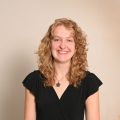
“What I love about FCAT is it’s really whatever you want to make it,” Sarah Wentworth said after recording a Deerfield Selectboard meeting.
Wentworth joined FCAT in June. Outside of recording local government meetings, she is filming a documentary on Conway’s history, told through the testimonial of a Conway resident from the 1800s.
“I really love capturing the essence of a place in a moment … I love thinking about how these images are going to be used 50 or 100 years from now; I want people to be able to see what it was like,” Wentworth said. “I don’t have kids, but I like to think for families and of the future generations, wanting to pass along the seed of something important.”
While Boschen highlighted the station’s milestones, he also warned the FCAT crew of threats to funding that could creep up on the horizon.
With streaming replacing cable in a growing number of homes, Boschen expects a drop in cable revenue. He believes the bill, An Act to Modernize Funding for Community Media Programming, would help FCAT absorb this impact by imposing a fee on streaming entertainment operators that would funnel into supporting community media. After the Massachusetts House of Representatives passed the bill last February, the state Senate referred it to the committee on Advanced Information Technology, the Internet and Cybersecurity.
For potential threats at the federal level, Boschen mentioned the American Broadband Deployment Act of 2025, which would enact a rollout of land use and zoning limitations on telecommunications deployment and the ability of municipalities to negotiate and renew cable franchise agreements, according to the National Association of Counties’ website.
In the face of potential funding cuts, Boschen stressed the importance of protecting public media like FCAT, comparing the station to a library.
“When Benjamin Franklin was involved in the establishment of libraries, he saw the importance of how those would help with a free society and maintain it, because it gave knowledge to everybody. The same can be said for us — we may be a product of a different era, but that doesn’t mean we’re irrelevant now,” Boschen said.